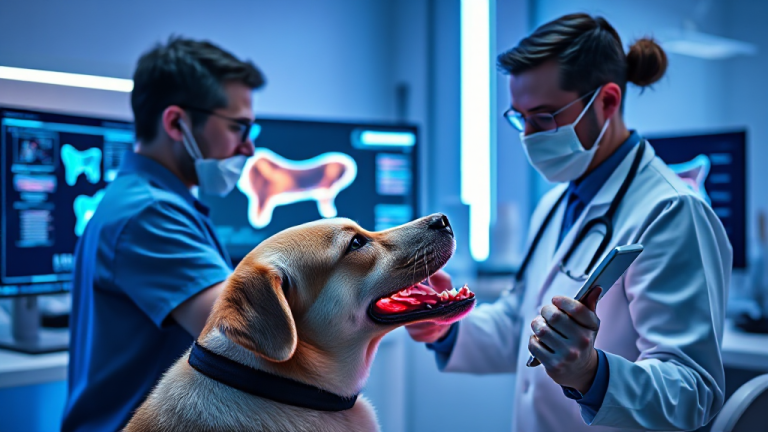
The Market Outlook for AI Dentistry in Companion Animal Care
Dental disease is among the most under-treated conditions in companion animal health. Estimates in veterinary circles consistently place periodontal disease in the majority of adult dogs and cats, yet a small fraction of those animals ever receive a professional dental procedure. The gap between clinical need and delivered care is the market opening that AI-assisted dental technology is now trying to close.
For clinic buyers and investors, the relevant question is no longer whether software belongs in veterinary dentistry, but where it creates measurable value. Platforms such as nerovet sit at the intersection of diagnostic imaging, workflow software and clinical decision support, and that position tells us a great deal about how this category is likely to develop.
Demand Drivers Behind Veterinary Dental Technology
Three forces are pushing dental technology up the purchasing agenda in small animal practice. The first is clinical volume: an aging pet population with more retained teeth, more chronic periodontal cases and more owners willing to pay for advanced care. The second is staffing. Veterinary teams remain stretched, and any tool that shortens charting, reduces repetitive documentation or standardizes oral exams has direct labor value.
The third driver is owner expectation. Pet owners who research nutrition and preventive care increasingly ask about dental health by name, and clinics that can show clear visual evidence of disease are better positioned to win treatment consent.
Why dental care remains under-treated
Under-treatment is not primarily a demand problem. It is a detection and communication problem. Oral exams are time-consuming, findings are often recorded inconsistently, and owners struggle to visualize a problem inside the mouth. Technology that captures, structures and presents dental findings addresses all three bottlenecks at once.
How AI changes the clinical workflow
AI-assisted dental tools typically support image interpretation, tooth charting, lesion flagging and structured record-keeping. The commercial appeal is not autonomy but consistency: a standardized exam that produces comparable records across clinicians and visits. That consistency also feeds better follow-up, because a clinic can track a specific tooth over time rather than relying on free-text notes.
Purchasing Patterns and the Adoption Outlook
Clinic buying behavior in this segment follows a recognizable pattern. Early adopters tend to be multi-vet practices with existing digital radiography and a partner or associate with a declared dental interest. These buyers evaluate on integration first, accuracy second and price third, because a tool that disrupts the practice management system costs more in lost time than it saves.
Single-doctor clinics behave differently. They tend to buy through continuing education, equipment bundles or distributor relationships, and they respond to demonstrable return on investment rather than feature depth. For vendors, that means the go-to-market motion has to serve both a considered enterprise sale and a faster, lower-touch purchase.
Pricing expectations and total cost of ownership
Buyers should model more than the subscription line. Relevant costs include imaging hardware compatibility, staff training hours, integration work with the practice management system and the time needed to change exam habits. A tool that is cheap per month but requires a new sensor or a separate workstation can end up more expensive than a bundled alternative.
On the revenue side, the case is usually built on incremental dental procedures, improved compliance with follow-up care and reduced documentation time. Clinics that track these metrics before and after adoption are in a much stronger position to judge whether the technology is earning its place.
Risks and common buying mistakes
The most common mistake is treating AI dental software as a standalone gadget rather than a workflow change. Without a clear owner inside the practice, training fades and usage drops within a quarter. A second mistake is skipping integration checks; if images and notes do not flow into the existing record, staff will quietly revert to old methods.
Regulatory and liability questions also deserve attention. Buyers should confirm how the vendor describes the tool’s role, how findings are documented and who remains responsible for the clinical decision. AI output that is presented as a suggestion, with the veterinarian as the decision-maker, fits established professional norms more comfortably than output framed as a diagnosis.
- Check integration with your practice management and imaging systems before signing.
- Ask how the vendor handles training, onboarding and ongoing support.
- Confirm the documentation model for AI-generated findings.
- Set a baseline for dental procedures and charting time so ROI can be measured.
The outlook for the category is constructive but uneven. Growth is likely to concentrate in practices that already have digital imaging and a preventive care culture, while broader adoption depends on simpler integration, clearer pricing and evidence that the tools improve both clinical outcomes and practice economics. Companies positioning themselves as workflow partners rather than point solutions, including nerovet, are betting that this is where the durable market sits.
Frequently Asked Questions
How quickly can a clinic expect a return on AI dental technology?
Timelines vary with case volume and existing equipment. Practices that already perform regular dental procedures and track compliance often see the clearest impact within the first year, mainly through better follow-up and more complete charting. Clinics with low dental volume should expect a longer path and should plan adoption around building that service line.
Does AI replace the veterinarian’s clinical judgment?
No. The practical role of these tools is to support detection, standardize records and speed up documentation. The veterinarian remains responsible for the examination, the diagnosis and the treatment plan, and buyers should favor vendors whose product language reflects that division of responsibility.
What should buyers ask before committing to a subscription?
Ask about integration with your current imaging and practice management systems, the training included in the contract, how findings are stored and exported, and what happens to your data if you leave. A short pilot with defined success metrics is usually more informative than a feature comparison.
Is this technology relevant for cats as well as dogs?
Yes. Feline dental disease, including resorptive lesions, is a significant part of small animal dental caseloads. Buyers should confirm that the tool’s charting and image support cover feline dentition and the lesion types their clinicians encounter most often.